
Skip to content
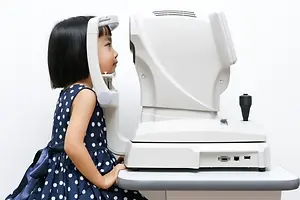
A young girl with black hair is sitting on a chair and looking into an ophthalmoscope with her right hand holding the ophthalmoscope's head, probably in a hospital room.
Family-focused eye care in Corpus Christi

Children's Eye Care for Ages 7+

PLAN YOUR VISIT
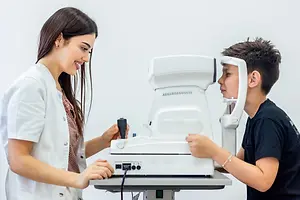
A woman and a boy are standing in front of a machine with a white screen and a black handle, probably an eye examination machine, in an indoor area, probably a clinic. The woman is holding the black handle of the machine, and the boy is looking at the machine's screen with his eyes closed. The woman is wearing a white coat and a bracelet. The boy is wearing a bracelet and a black t-shirt.

Clear, comfortable vision supports reading, classroom learning, sports, driving as teens get older, and everyday activities. Because children often adapt to changes in their vision, they may not complain even when they're having difficulty seeing.

Dr. Christopher Trevino sees children aged 7 and older. If you're scheduling for a younger child, please contact the office first so we can help you determine the right next step.

Yes. A school vision screening can help identify some problems, but it is not the same as a comprehensive eye exam. A child can pass a screening and still have problems with focusing, eye tracking, eye coordination, or other vision issues that affect reading and learning.

A comprehensive exam gives your optometrist a more complete picture of how your child sees and how well their eyes work together.

Signs Your Child May Be Having Trouble With Their Vision

Children do not always say, "I can't see clearly." Often, parents notice behavioral changes first.

Watch for signs such as:

  • Frequent squinting or eye rubbing
  • Headaches or tired eyes
  • Holding books or screens very close
  • Losing their place while reading
  • Covering one eye or tilting the head
  • Avoiding reading or close-up work
  • Complaints of blurry or double vision
  • Difficulty seeing the board or distant objects
  • An eye that appears to turn in or out

These signs don't always mean a vision problem, but they are good reasons to schedule an exam.

What Happens During a Child’s Eye Exam?

A child’s eye exam is designed to evaluate more than whether your child can read an eye chart. The exact testing depends on their age and needs, but the visit may include checks of:

  • Distance and near vision
  • Prescription needs
  • Eye focusing
  • Eye tracking and movement
  • How well the eyes work together
  • Eye alignment
  • Overall eye health

Your child’s optometrist will explain the findings in plain language and let you know whether anything needs monitoring or follow-up.

Vision Matters Beyond the Classroom

Schoolwork is only one part of a child’s visual world. Good vision also supports sports, hobbies, screen use, coordination, and the confidence to participate comfortably in daily activities.

As children move into their teen years, visual demands may increase with heavier schoolwork, more screen time, sports, work, and eventually driving. Regular eye care helps keep pace with those changes.

Make Eye Care Easier to Fit Into Your Family’s Week

School and work schedules can make weekday appointments difficult. Corpus Cristi Eye Professionals is open seven days a week, with evening hours Monday through Friday, plus Saturday and Sunday availability. We also accept walk-ins during office hours.

Schedule Your Child’s Eye Exam

If your child is due for a routine exam, has noticed a change in vision, or is showing signs that seeing may be harder than it should be, schedule a visit with Corpus Cristi Eye Professionals.